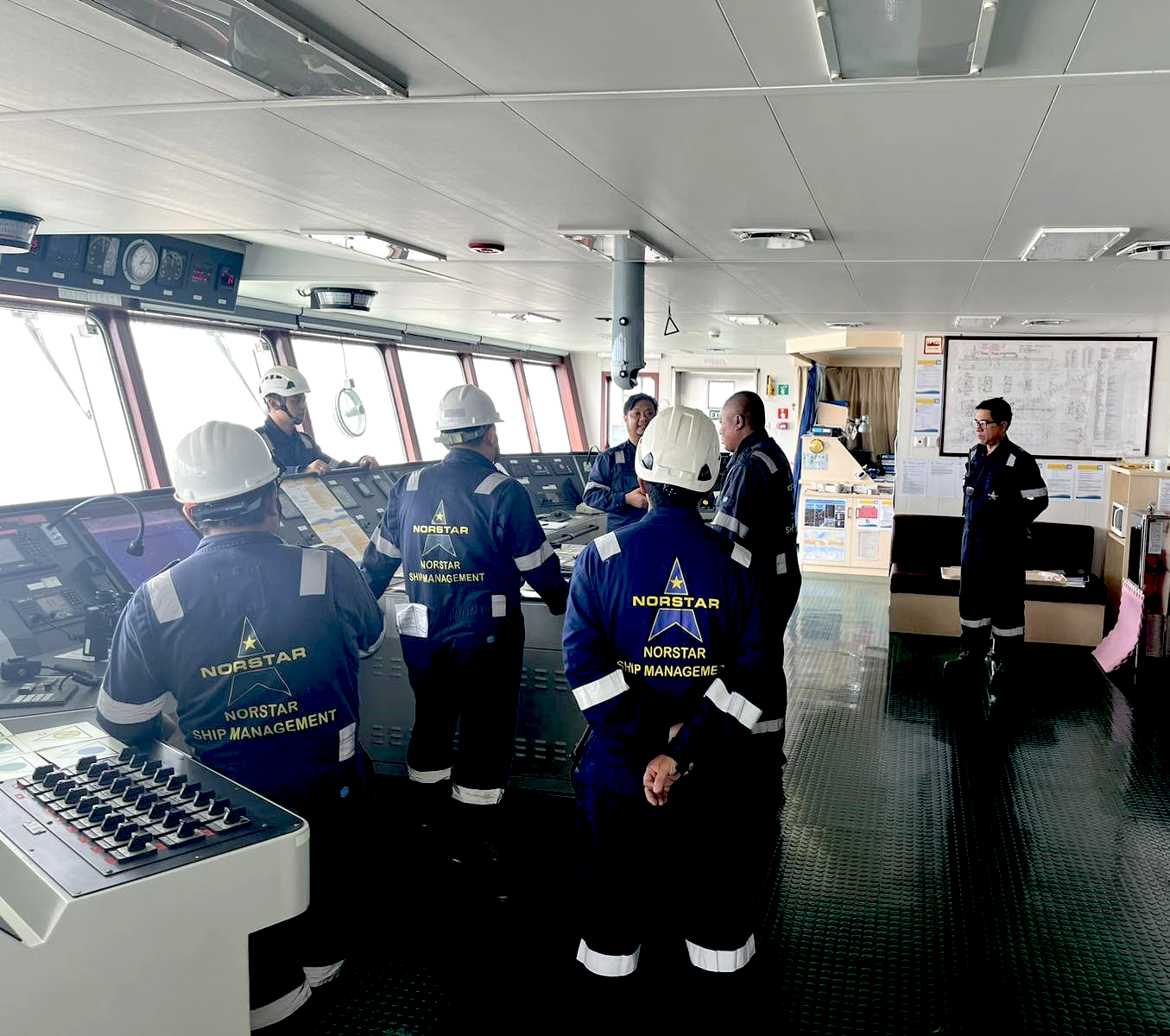
Bulk Carrier Crew Requirements
Manning, Certifications and Compliance
Everything you need to know bulk carrier crew requirements .
Bulk carriers are the workhorses of global commodity trade — hauling coal, grain, iron ore, and raw materials across every major trade lane in the world. But behind every compliant, safely operated vessel is a crew that meets precise international requirements.
Whether you are a vessel owner ensuring your fleet stays operationally and legally sound, or a seafarer planning your route into dry cargo shipping, understanding bulk carrier crew requirements is essential. Get them wrong as an operator, and you risk port detention and commercial disruption. Get them right as a seafarer, and you have a clear path into one of the most widely available sectors in maritime employment — explore seafarer opportunities with Norstar here.
This guide covers everything you need to know: minimum safe manning, STCW certifications, ISM Code obligations, and MLC 2006 standards.
How Many Crew Does a Bulk Carrier Need?
One of the most common questions operators and seafarers ask is: how many crew does a bulk carrier need? The answer varies by vessel size and flag state, but it is always anchored by the vessel’s Minimum Safe Manning Certificate — a flag state-issued document that defines the legal minimum number of officers and ratings required to operate the vessel safely.
Manning levels are determined by gross tonnage, deadweight, propulsion type, and trade route. As a practical guide:
- Handysize bulk carriers (10,000–35,000 DWT): Typically 18–22 crew, including a Master, three deck officers, a Chief Engineer, two or three engineer officers, and a deck and engine ratings complement
- Supramax / Ultramax (50,000–65,000 DWT): Usually 20–25 crew with a similar officer structure, often including a larger ratings team for cargo handling
- Capesize (100,000+ DWT): 22–28 crew, with additional officers sometimes required for complex cargo and ballast operations
For operators
Never operate below the minimum safe manning level. Even temporary shortfalls constitute a breach of the STCW Convention and can trigger port state control detention at any of the vessel's port calls.
For seafarers
Handysize and Supramax bulk carriers are excellent vessels for early career development. The smaller officer complement means junior officers tend to get broader hands-on experience — cargo planning, stability work, and watchkeeping — earlier than on larger, more specialised ship types.
Bulk Carrier Manning Requirements: STCW Certifications
All crew aboard a bulk carrier must hold valid, flag-state-endorsed STCW certifications appropriate to their rank. These are the non-negotiables:
The breadth of this scope is why effective crew management requires specialist expertise. Each of these functions involves its own regulatory framework, operational complexity and risk — and they are all interdependent. A lapsed certificate discovered at port state control, a payroll error, or a poorly planned crew rotation can have immediate consequences for vessel operations and charter commitments.
Deck Officers Require:
- Certificate of Competency (CoC) at the correct level — OOW, Chief Mate, or Master
- Basic Safety Training (BST): personal survival, fire prevention, first aid, personal safety
- Proficiency in Survival Craft and Rescue Boats (PSCRB)
- Advanced Fire Fighting (AFF)
- Medical First Aid (OOW level) or Medical Care (management level)
- Bridge Resource Management (BRM)
- ECDIS type-specific training (for the system installed aboard the vessel)
Engine Officers Require:
- Certificate of Competency as EOOW, Second Engineer, or Chief Engineer
- Proficiency in survival craft
- Engine Room Resource Management (ERM)
Ratings require:
- Able Seafarer Deck (ASD) or Engine (ASE) certification
- Basic Safety Training (BST)
For seafarers building a career on bulk carriers:
BST is your non-negotiable starting point. Without it, no reputable operator will sign you on. From there, your CoC level determines the rank you can hold. If you are progressing toward Chief Officer, PSCRB and AFF become essential. ECDIS type-specific training is increasingly checked at port state control inspections — confirm which ECDIS system is fitted before joining any vessel.
All certificates must be in-date and endorsed by the relevant flag state. Expired or unendorsed certificates are among the most common causes of port state control deficiencies on bulk carriers.
ISM Code: The Operator's Compliance Duty
Under the International Safety Management (ISM) Code, vessel operators bear direct responsibility for crew competency and for ensuring the Safety Management System (SMS) reflects actual crewing arrangements on board. In practice, this means:
- All crew members must be briefed on their duties and emergency procedures before departure
- Officers must be familiar with ship-specific equipment and cargo systems
- Records of familiarisations, drills, and training must be maintained and available for inspection
Flag state requirements can add further obligations — vessels calling at US ports must comply with USCG requirements, while those trading in EU waters must align with EU MLC standards.
It is also worth noting that bulk carrier crew competency is not simply a question of valid certificates — sector-specific experience matters enormously. Operators who move officers between tanker and dry cargo fleets without accounting for this risk introducing gaps that certificates alone will not reveal. For a deeper look at why this distinction matters, read our analysis on critical distinctions in tanker and bulk carrier manning.
For seafarers
The Safety Management System is not just documentation — it is the vessel's operational rulebook. Inspectors ask crew directly about emergency procedures during port state control inspections, so take your familiarisation briefing seriously when joining a new vessel.
MLC 2006: Seafarer Rights and Operator Obligations
The Maritime Labour Convention 2006 sets minimum standards for working conditions aboard all commercial vessels, including bulk carriers. Key obligations for operators include:
- Seafarers’ Employment Agreements in place for all crew before departure
- Rest hour compliance: STCW and MLC rest hour requirements must be observed and recorded
- Valid medical fitness certificates (ENG1 or equivalent) for all crew
- Repatriation provisions documented and in place
- Crew covered by appropriate P&I and insurance arrangements
For seafarers
MLC is your protection at sea. It guarantees minimum wage standards, mandated rest hours, access to medical care, and the right to be repatriated at the operator's cost. Know your rights, and check that your Seafarers' Employment Agreement reflects them before you sign on.
Norstar Crew Management: Bulk Carrier Crewing Support
Managing bulk carrier crew requirements across multiple vessels and flag states is complex and time-sensitive. A single expired certificate or documentation gap can trigger a port state control detention with significant commercial consequences.
Norstar Crew Management provides end-to-end crew management for bulk carrier operators — including certificate tracking, manning compliance, flag state documentation, and deployment planning. Our approach is built on sector-specific expertise; we understand that bulk carrier crewing demands a distinct professional profile, not just a valid certificate. For more on this, see our article on why sector experience is everything in tanker and bulk carrier manning. For seafarers, working with Norstar means placement with operators who maintain full compliance, proper contracts, and a professional working environment. Explore current opportunities on our Seafarers page or learn more about how crew management works.
Whether you're reviewing your current crew management model or looking for a new partner, we're happy to walk through what Norstar can offer.
Talk to us about your crewing requirements
Share the Post:
Related Posts

We connect ship owners with competent crew and seafarers with global opportunities.